Memory Designed For AI Compute, While Being Able To Serve The Larger Memory Markets
Agni Semiconductor is at the forefront of innovation in non-volatile memory (NVM) technology, addressing the challenges of modern computing with groundbreaking solutions. Founded by University of Pennsylvania (Penn) professors Deep Jariwala, Troy Olsson, Eric Stach, and industry expert Chris D’Couto, Agni combines academic excellence with practical expertise. Our advanced NVM solutions are designed to excel in speed, power efficiency, and high-temperature environments, enabling next-generation applications in AI, aerospace, automotive, and beyond. We are committed to pushing the boundaries of what’s possible in the digital age.

Mission
Our mission is to revolutionize the future of computing by developing advanced memory solutions that deliver unmatched speed, efficiency, and reliability. We strive to enable breakthrough innovations across industries, from AI and aerospace to automotive and energy, by providing cutting-edge technology that meets the demands of today and anticipates the challenges of tomorrow.
Vision
Our vision is to lead the global transition to a new era of computing, where our high-performance, energy-efficient, and resilient memory solutions empower industries to achieve their most ambitious goals. We envision a world where Agni’s technology is the backbone of the most advanced and demanding applications, driving progress and creating opportunities for a smarter, more sustainable future.
Meet The Minds Behind Agni
At Agni Semiconductor, our team of industry experts, researchers, and engineers are united by a commitment to innovation. The minds behind Agni work collaboratively to develop cutting-edge memory solutions that power the future of AI and advanced computing. Together, we’re pushing the boundaries of technology and shaping the next generation of advancements.
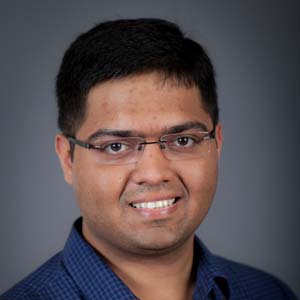
Deep Jariwala
Co-Founder
Deep Jariwala is an Associate Professor and the Peter & Susanne Armstrong Distinguished Scholar in the Electrical and Systems Engineering as well as Materials Science and Engineering at the University of Pennsylvania (Penn). Deep completed his undergraduate degree in Metallurgical Engineering from the Indian Institute of Technology in Varanasi in 2010 and his Ph.D. in Materials Science and Engineering from Northwestern University in 2015. Deep was a Resnick Prize Postdoctoral Fellow at Caltech before joining Penn to start his own research group in 2018. His research interests broadly lie at the intersection of new materials, surface science and solid-state devices for computing, opto-electronics and energy harvesting applications in addition to the development of correlated and functional imaging techniques. Deep’s research has been recognized with several awards from professional societies, funding bodies, industries as well as private foundations the most notable ones being the Optica Adolph Lomb Medal, the AVS Peter Mark Memorial Award, IEEE Photonics Society Young Investigator Award, IEEE Nanotechnology Council Young Investigator Award, IUPAP Early Career Scientist Prize in Semiconductors and the Alfred P. Sloan Fellowship. He is also a co-recipient of the Bell Labs Prize in 2022 for his work on Memory Enhanced Computing with III-Nitride Ferrodiodes (together with Agni’s co-founders Troy Olsson and Eric Stach). He has published over 150 journal papers with more than 20000 citations and holds several patents. Deep spends his spare time with family and newborn son besides going for hikes and kayaking.

Eric Stach
Co-Founder
Eric Stach is the Robert D. Bent Professor of Engineering in the Department of Materials Science and Engineering at the University of Pennsylvania, Scientific Director of the Singh Center for Nanotechnology, Director of the Laboratory for Research on the Structure of Matter, a National Science Foundation sponsored Materials Research Science and Engineering Center and Co-Principal Investigator of NSF Partnership for Research and Education in Materials with the University of Puerto Rico, Advancing Device Innovation through Inclusive Research and Education. He received his B.S.E from Duke University, M.S.M.S.E. from the University of Washington, his Ph.D. in Materials Science and Engineering from the University of Virginia, and an M.B.A at Stony Brook University. He has held positions as Staff Scientist and Principal Investigator at the National Center for Electron Microscopy at the Lawrence Berkeley National Laboratory, then as Associate, and subsequently appointed Full Professor at Purdue University. Prior to his appointment at Penn, he was a Group Leader at the Center for Functional Nanomaterials, Brookhaven National Laboratory. His research interests focus on the application of advanced electron, ion and x-ray-based characterization methods to understand material
structure/property relationships, across a broad class of materials. He is a Fellow of the American Physical Society, Materials Research Society, and the Microscopy Society of America. He is also a co-recipient of the Bell Labs Prize in 2022 for his work on Memory Enhanced Computing with III-Nitride Ferrodiodes (together with Agni’s co-founders Deep Jariwala and Troy Olsson). He has published over 350 journal papers with more than 60000 citations and holds several patents. He spends whatever spare time he can find with his family, walking his dogs and cooking overly complicated dinners.

Troy Olsson
Co-Founder
Roy (Troy) H. Olsson III is an Associate Professor in the Department of Electrical and Systems Engineering at the University of Pennsylvania. His research interests include materials, devices, and architectures for low-power processing of wireless, sensor, and biological signals. Prior to joining Penn, Troy was a Program Manager in the DARPA Microsystems Technology Office (MTO), where he led multiple programs in the areas of low energy sensing and communications. From 2004 to 2014, Troy was a Principal Electronics Engineer in the MEMS Technologies Department at Sandia National Laboratories where he established research efforts in piezoelectric microdevices for processing of RF, inertial and optical signals. He received his Ph.D. degree in electrical engineering from the University of Michigan, Ann Arbor in 2004. His graduate research was in the areas of low-power electronics and sensor arrays for interfacing with the central nervous systems. Troy has authored more than 150 technical journal and conference papers and holds 32 patents in the areas of microelectronics and microsystems. He was awarded an R&D100 award in 2011 for his work on Microresonator Filters and Frequency References, was named the 2017 DARPA program manager of the year, was the recipient of the NSF CAREER award in 2019, and was the general chair of the 2022 PiezoMEMS workshop. Troy was awarded the 2022 Bell Labs Prize, in conjunction with Agni co-founders Deep Jariwala and Eric Stach, for their work on Memory Enhanced Computing with III-Nitride Ferrodiodes.

Chris D'Couto
CEO & Co-Founder
Chris is a seasoned executive, and throughout his career has enjoyed successfully bringing new, disruptive products to the market. During his career, he had worked at Intel Corporation, Novellus Systems (since acquired by Lam Research), FormFactor. Inc. and at XNRGI, Inc. He enjoys developing teams that are maniacally focused on getting things done, while enjoying the journey. He has a PhD (Chemical Engineering) from Clarkson University and an MBA from the Haas School of Business, UC Berkeley. He enjoys working out, gardening, cooking, spending time hiking and camping with his family and volunteering.

Advisory Board
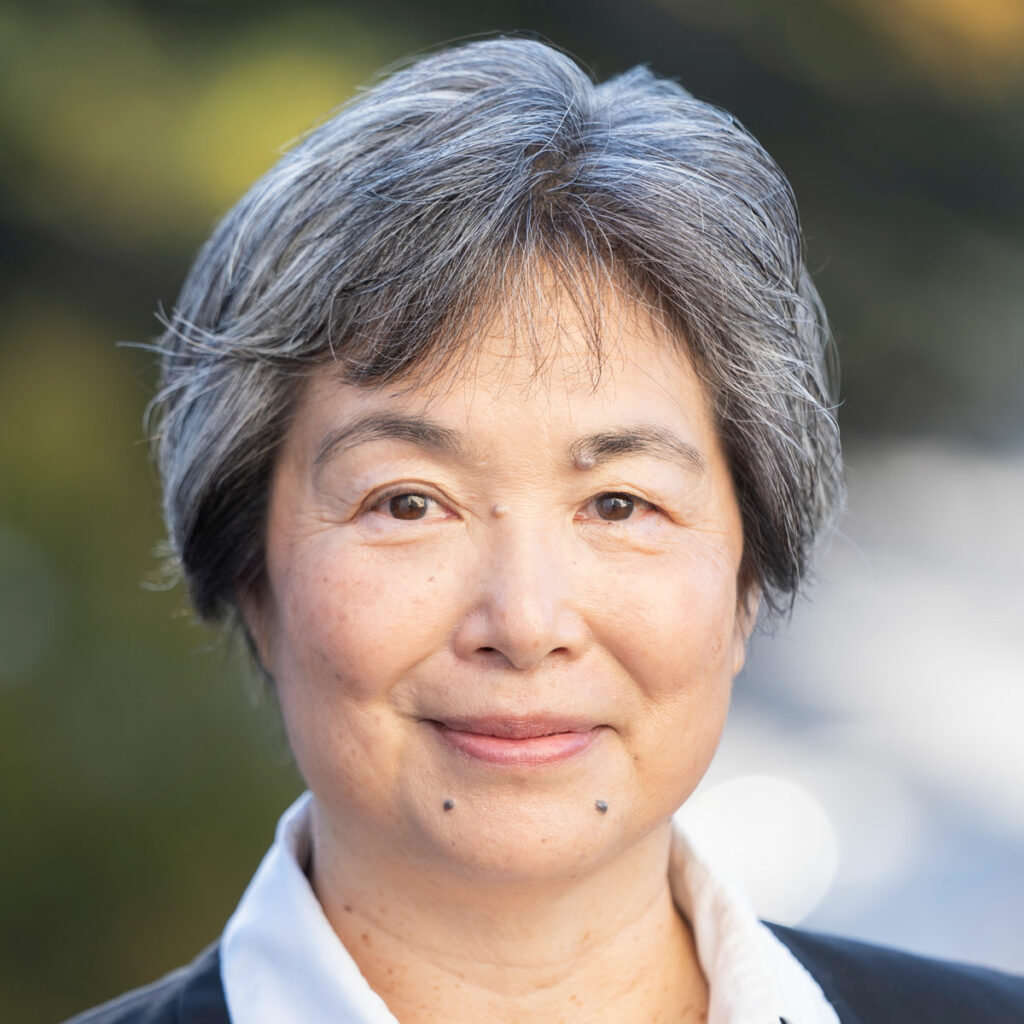
Dr. Tsu-Jae King Liu
Member
Tsu-Jae King Liu is President of the National Academy of Engineering and a distinguished leader in engineering education, research and innovation. She is renowned for co-developing the FinFET transistor design used in today’s leading-edge computer chips and smartphones. A Professor Emerita at UC Berkeley, she previously served as Dean of the College of Engineering from 2018 to 2025.
Liu has authored more than 550 publications, holds 97 U.S. patents and has received numerous honors, including the DARPA Significant Technical Achievement Award. She is a Fellow of the IEEE and the National Academy of Inventors and was elected to the National Academy of Engineering in 2017.
Tsu-Jae King Liu was born in Ithaca, NY and raised in the San Francisco Bay Area. She attended Stanford University, where she earned her undergraduate and graduate degrees in Electrical Engineering before joining the Xerox Palo Alto Research Center as Member of Research Staff in 1992. In 1996 she joined the faculty of the Department of Electrical Engineering and Computer Sciences at the University of California, Berkeley, where she is currently Dean of the College of Engineering. Dr. Liu conducts research in advanced materials, fabrication processes, and devices for integrated circuits used for computing and memory. She has authored or co-authored over 560 publications and holds close to 100 patents. Dr. Liu’s research contributions in the field of semiconductor microelectronics have been recognized by many awards, most recently the 2024 IEEE Founders Medal.
Dr. Liu is a Fellow of the Institute of Electrical and Electronics Engineers (IEEE), an elected member of the U.S. National Academy of Engineering (NAE), and a Fellow of the National Academy of Inventors. She presently serves as a member of the U.S. Department of Commerce National Institute for Standards and Technology (NIST) Industrial Advisory Committee and she is a Director of Intel Corporation and of MaxLinear, Inc.